

AI infrastructure knowledge base.
Our AI infrastructure knowledge base brings together four formats: articles on current questions, a German-language AI glossary for technical terms, implementation guides for concrete projects, and comparisons between approaches and tools. All of it is written for decision-makers in the Mittelstand, with no assumed technical background and a clear tie to real business questions.
What's on the shelf
Articles take on questions that keep coming up in our projects and that don't fit into two sentences. They aren't tied to an offering. When the facts change, we change the article instead of writing a new one. On the shelf: How long does an AI implementation take?
The glossary tells you what a term means when you meet it in a proposal or a tender. One entry, one thing, without a chain of references to work through first. On the shelf: What does private AI infrastructure mean?
A guide walks alongside a project that has already been decided: what happens in which order, where it usually stalls, what should be settled beforehand. Written for whoever has to prepare the decision. On the shelf: From pilot project into operations
A comparison puts two routes side by side and says from what point each one holds up. Usually that comes down to a number. We don't recommend either option outright, because the answer depends on volume, on your data and on your time horizon. On the shelf: Own GPUs vs token pricing
Knowledge Articles & Guides
In-depth analyses, practical guides, definitions and cost calculations for enterprise AI.

Challenges of AI in manufacturing: what 52 practitioner conversations show
The challenges of AI in manufacturing are not primarily technological. In our analysis of 52 published practitioner conversations (September 2025 to August 2026), 42 of 206 pain point statements concern data, IT/OT and integration, and a further 32 concern leadership, culture and change. Technology as such hardly appears as a problem.

Predictive maintenance in practice: what the Bosch Rexroth case shows
Predictive maintenance in practice means that a model detects wear and failure patterns in sensor or control data, and maintenance moves repairs into planned windows. Documented cases show large effects, such as 70 to 80 % less downtime in pilots at Bosch Rexroth (company statement). Prerequisites: failure history, a narrow selection of equipment and a baseline before the start.

Shadow AI in companies: why bans do not protect you
Shadow AI describes AI tools that employees use without approval, usually public services accessed through private accounts. It grows wherever AI is banned or merely tolerated. What works against it is an approved tool, a short AI usage policy and a data classification that sets out which data may leave the company.
Barriers to AI adoption: why data and integration slow you down
The biggest barriers to AI adoption in manufacturing are data access, IT/OT integration and a lack of operational responsibility, not the technology. In our analysis of 52 practitioner conversations, 42 of 206 pain point statements concern data, IT/OT and integration. In surveys, 77 % name data protection requirements as the number one obstacle (Bitkom 2026, the German digital industry association).

Intralogistics automation: what a sequencing process delivered in six weeks teaches
Intralogistics automation pays off particularly where manual, recurring transport and sequencing steps set the pace. A documented case from VW's Gläserne Manufaktur shows, according to the company, that such a process can be fully automated with transport robots, a cobot and adapted load carriers, implemented in six weeks.

AI use cases in manufacturing: the seven fields at a glance
AI use cases in manufacturing fall into seven fields: predictive maintenance, quality inspection, planning and supply chain, energy and process, knowledge and assistance, engineering and back office, and agentic systems. They differ widely in maturity, typical impact and data requirements. Your own data situation, not the technology, should therefore decide where you start.

AI for mid-sized companies: status, barriers and a plan for the first 90 days
AI for mid-sized companies is more widespread than often assumed, but unevenly distributed: use rises with company size and even more with in-house research and development. It is held back mainly by data protection, the skills shortage and lack of time, hardly by technology. A narrow start with a short payback, prepared in 90 days, makes sense.

Choosing an AI service provider: 14 questions to ask before you sign
When choosing an AI service provider, focus less on models and demos and more on three interfaces: where the system runs, whether the implementation actually reaches production at the agreed price, and who then operates the system with written commitments. Add to that a defined exit, references with figures and a clear data classification.

ZIM funding freeze alternatives: which funding sources remain for AI projects
As of August 2026, the most important ZIM funding freeze alternatives for AI projects are KMU-innovativ, with its next deadline on 15 October 2026, regional programmes such as Digitalbonus Bayern and, in Switzerland, Innosuisse. The former standard federal programmes have expired. Plan your project so that it pays for itself from its own business case.
Editor's Choice
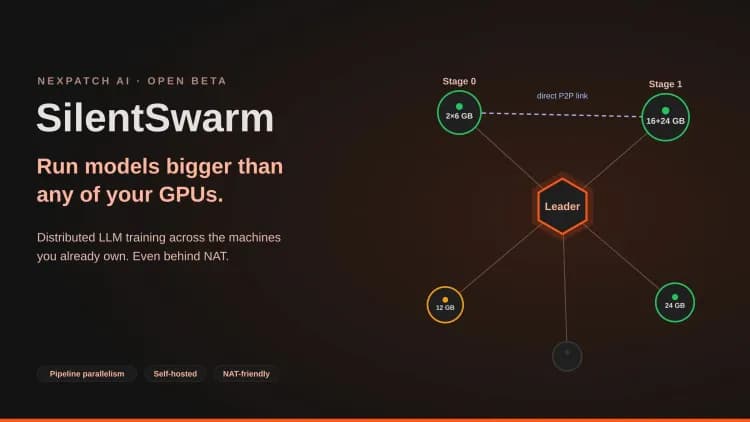
Run Models Bigger Than Any of Your GPUs: SilentSwarm Is Now in Open Beta
SilentSwarm splits a large language model into pipeline stages and spreads them across the mismatched GPUs you already own, even behind NAT and firewalls. Train, fine-tune and chat as if it were one machine.
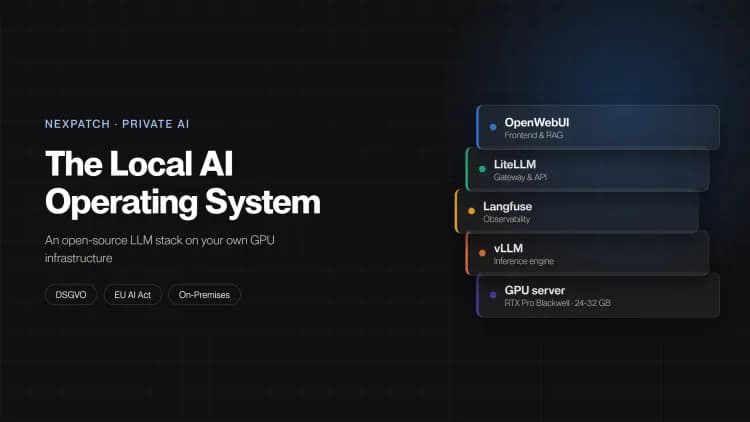
The Local AI Operating System: GDPR-Compliant LLMs on Your Own Server Infrastructure
vLLM, LiteLLM, Langfuse and OpenWebUI on your own GPU: the most direct path to data sovereignty, GDPR compliance and predictable AI costs.

The EU AI Act – What will happen on 2 August 2026?
2 August 2026 is the first hard deadline under the EU AI Act. From that date onwards, certain AI systems will be banned in the European Union – not regulated, not restricted, but illegal. Anyone who continues to operate them after that date risks fines of up to 35 million euros or 7 per cent of their company’s global annual turnover.
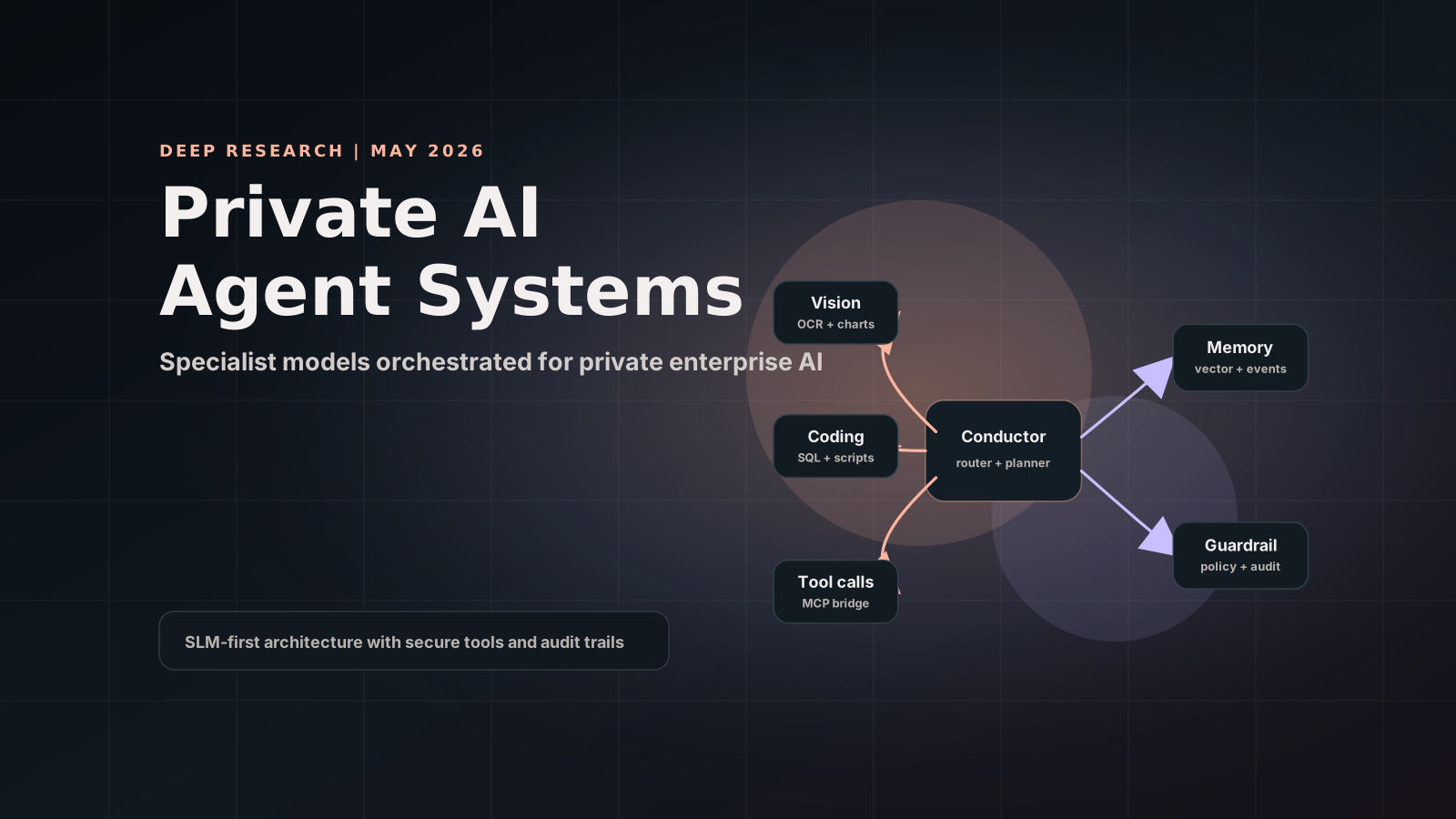
Private AI Agent Systems with Orchestrated Specialist Models
How private multi-agent systems combine small specialist models, MCP, A2A and cost-aware routing into secure enterprise AI architectures.
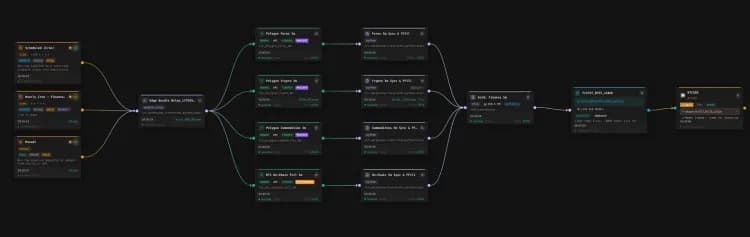
Time Series Forecasting with PatchTST: Why Classical Models Are No Longer Enough
Why modern time series forecasting needs more than ARIMA and Prophet: patch-based Transformers, rigorous benchmarks, and a platform that connects ETL, training, monitoring, and forecast APIs.
Why we write this
We write these pages because we answer the same questions in every first call: what it costs, how long it takes, what happens after go-live, and what all of that depends on. They're good questions. They don't belong in a sales conversation where you can only answer them under time pressure.
Which is why the answer sits here instead, readable without an appointment. If you finish reading and conclude you don't need this, or don't need it from us, the page has done its job. The shelf grows slowly: we write once a project has taught us something that holds true beyond that project.
When reading isn't enough
At some point the general answer stops helping, because the next question depends on your own organisation: your data, your department, your volume. There are three routes from here. The tax advisors industry page shows how these topics look in one specific field. The cost calculator gives you a first ballpark to work with internally. And if you have a question nothing here fits, write to us via the contact page. We answer even when it doesn't turn into a project.