Our Blog
Insights, guides, and perspectives on AI, software development, and technology trends from the NEXPATCH team.
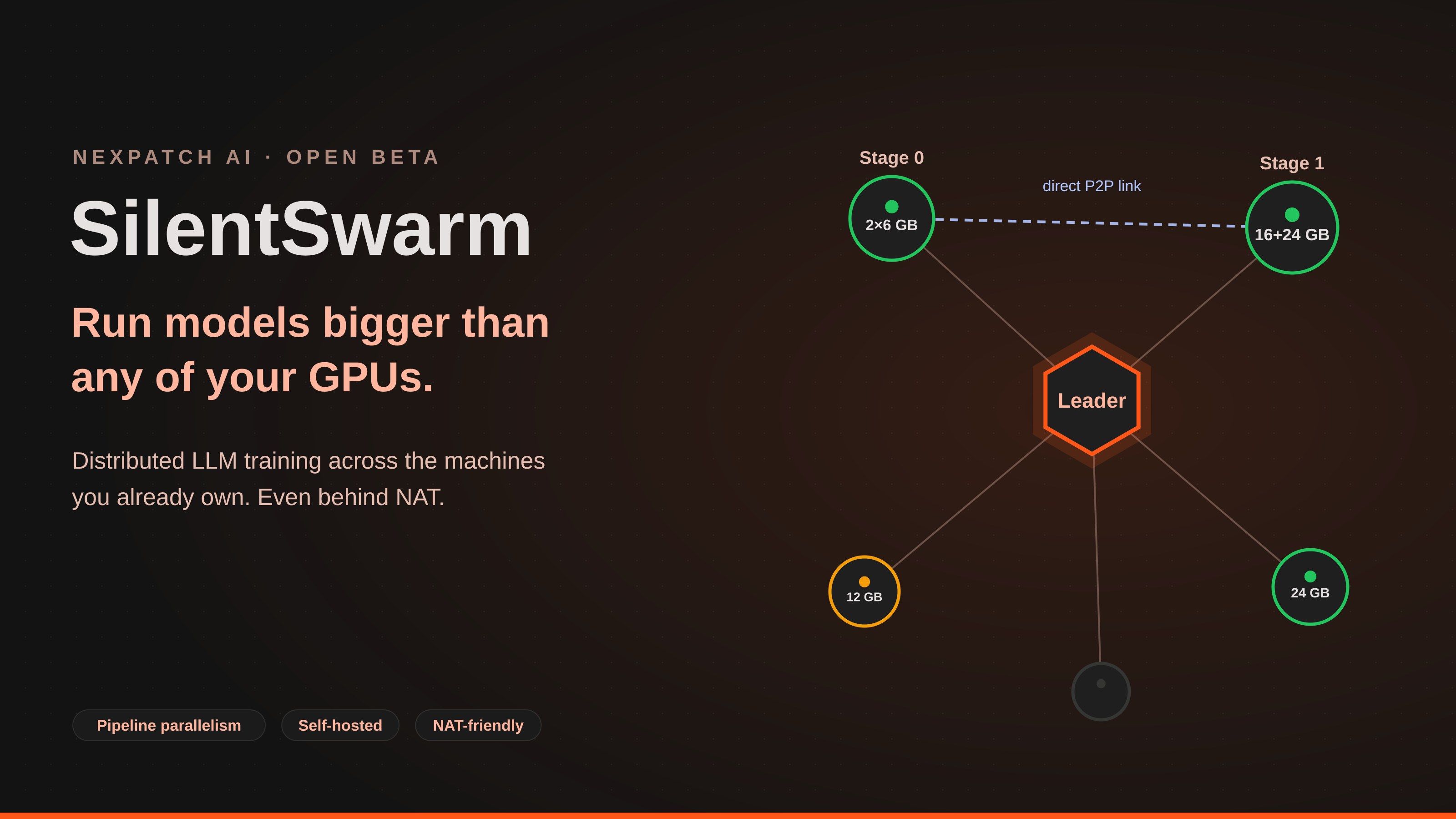
Run Models Bigger Than Any of Your GPUs: SilentSwarm Is Now in Open Beta
SilentSwarm splits a large language model into pipeline stages and spreads them across the mismatched GPUs you already own, even behind NAT and firewalls. Train, fine-tune and chat as if it were one machine.
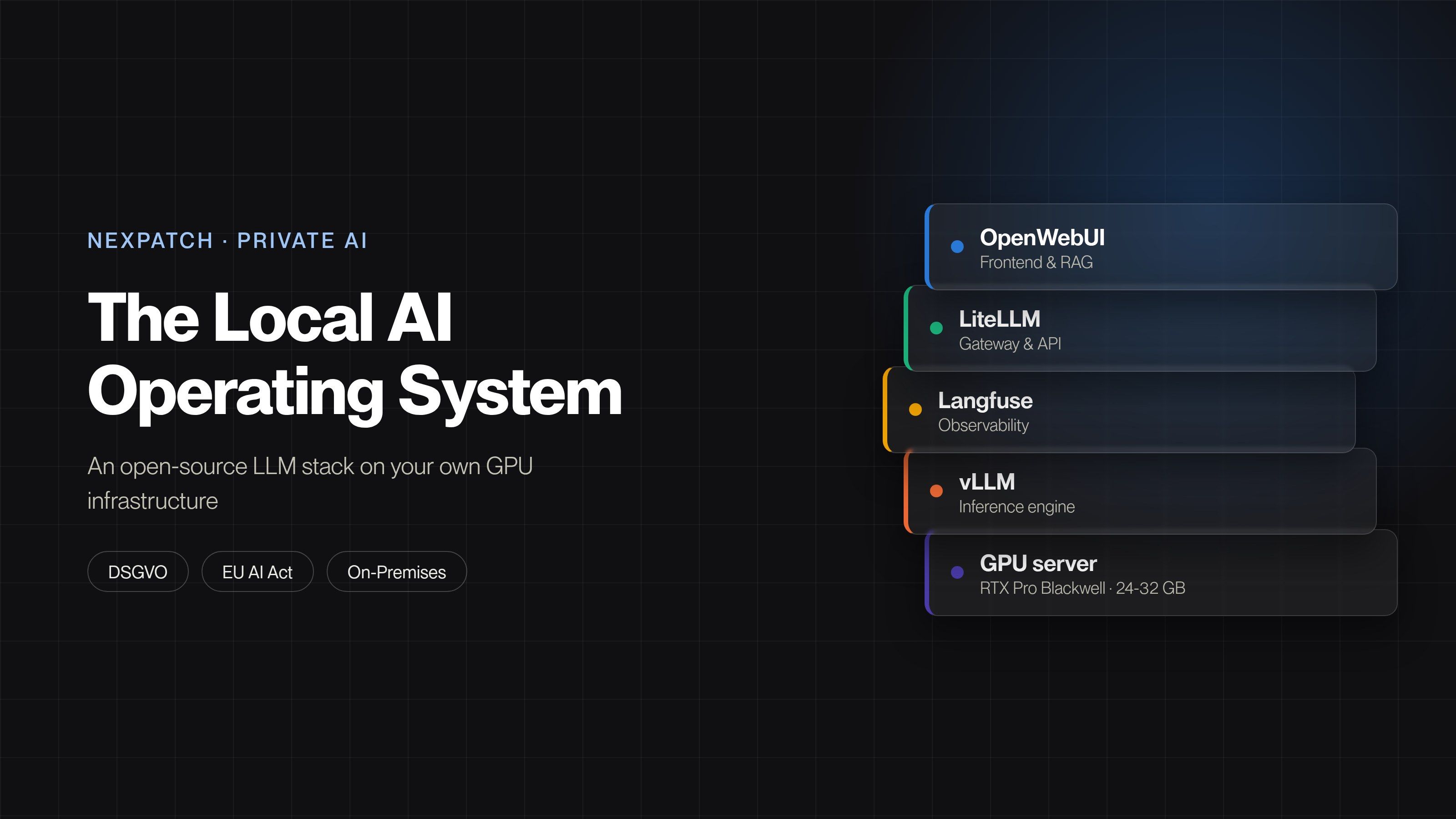
The Local AI Operating System: GDPR-Compliant LLMs on Your Own Server Infrastructure
vLLM, LiteLLM, Langfuse and OpenWebUI on your own GPU: the most direct path to data sovereignty, GDPR compliance and predictable AI costs.
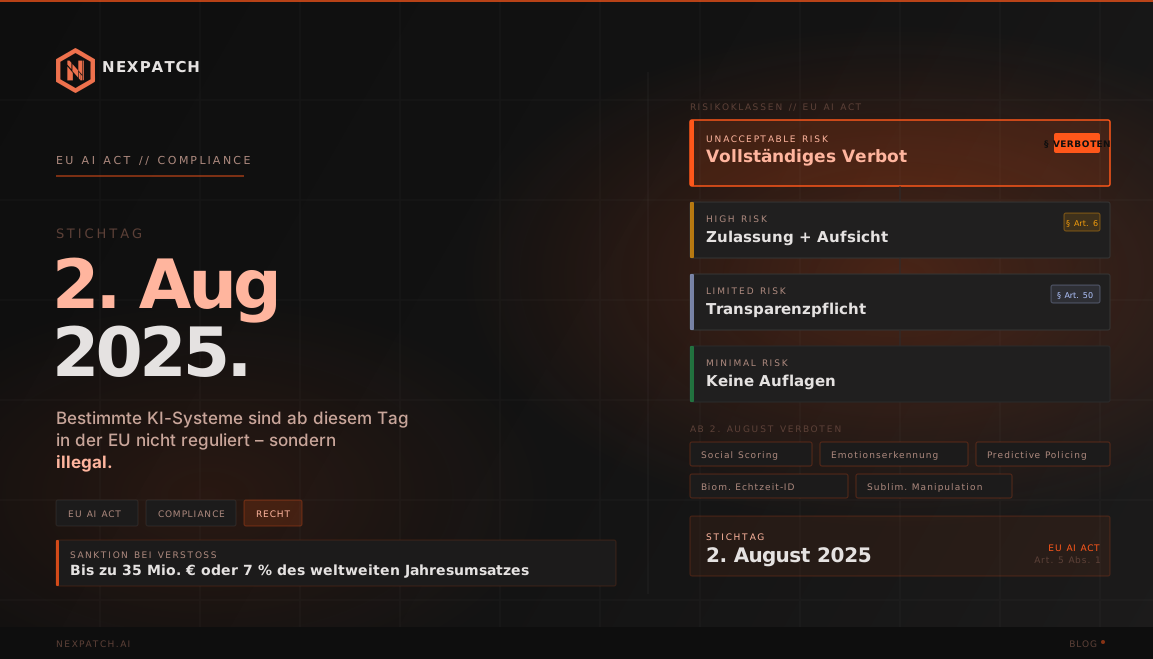
The EU AI Act – What will happen on 2 August 2026?
2 August 2026 is the first hard deadline under the EU AI Act. From that date onwards, certain AI systems will be banned in the European Union – not regulated, not restricted, but illegal. Anyone who continues to operate them after that date risks fines of up to 35 million euros or 7 per cent of their company’s global annual turnover.
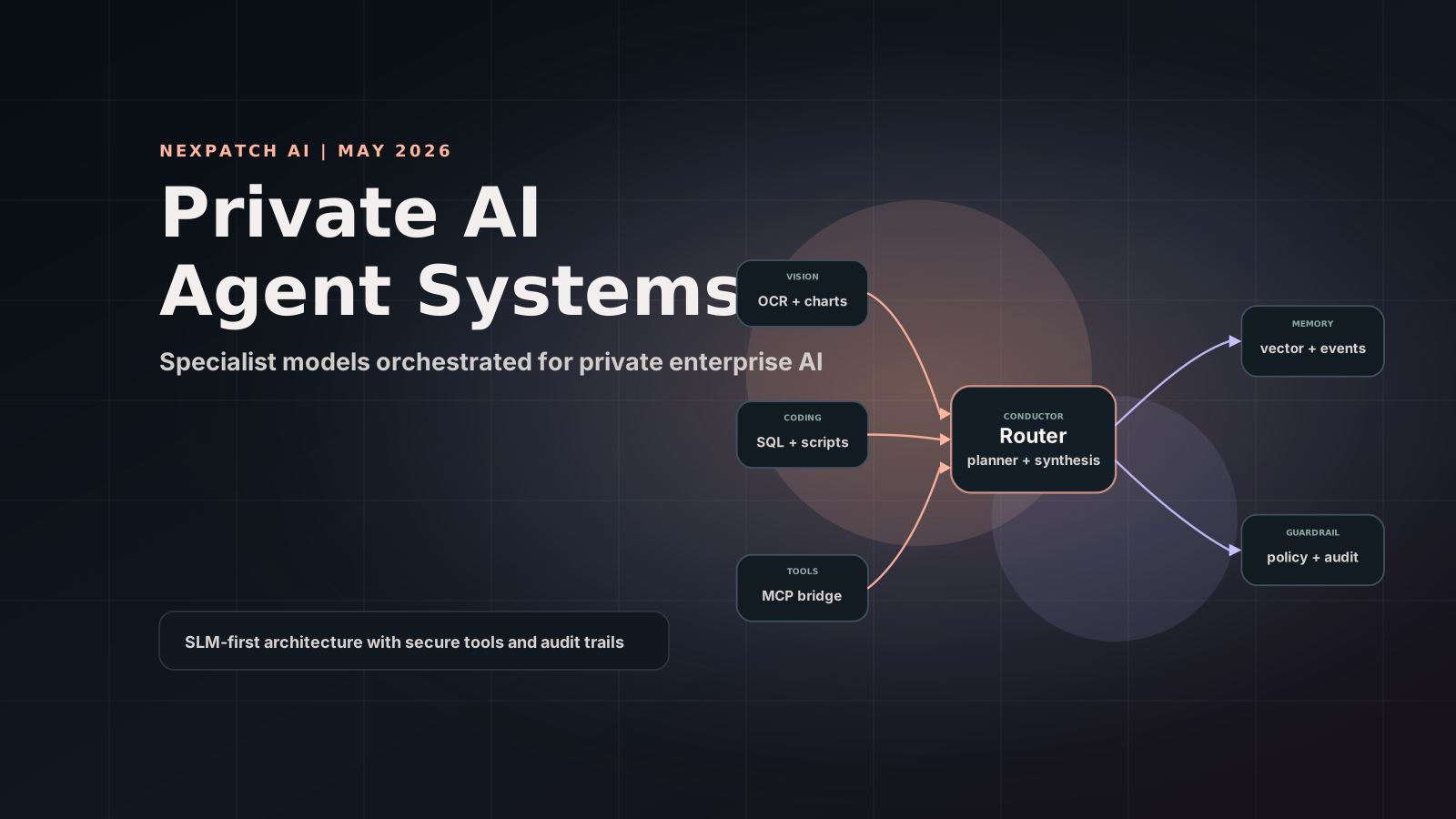
Private AI Agent Systems with Orchestrated Specialist Models
How private multi-agent systems combine small specialist models, MCP, A2A and cost-aware routing into secure enterprise AI architectures.
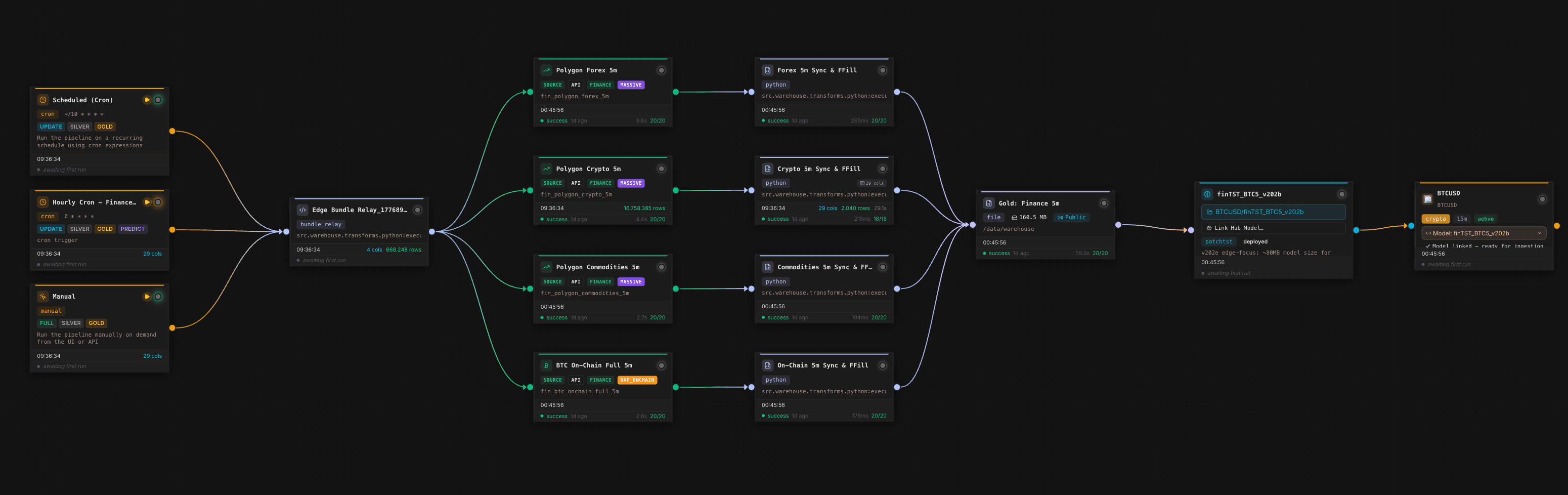
Time Series Forecasting with PatchTST: Why Classical Models Are No Longer Enough
Why modern time series forecasting needs more than ARIMA and Prophet: patch-based Transformers, rigorous benchmarks, and a platform that connects ETL, training, monitoring, and forecast APIs.

Private AI: Running LLMs on Your Own Infrastructure — 60% Cheaper Than OpenAI
European enterprises are bringing AI in-house. Open-source LLMs now match GPT-4-level performance, and self-hosting at scale delivers 40–60% cost savings — with full GDPR and EU AI Act compliance.

ETL Pipelines Reimagined: Visual Pipeline Orchestration with Orpheon
Manual ETL maintenance consumes 60–80% of data engineering time. Visual pipeline orchestration bridges the gap between no-code and code-first — with Orpheon as a visual platform for Parquet, DuckDB, real-time and batch processing.

Agentic AI in Practice: How Specialized Agents Automate Enterprise Processes
How autonomous AI agents with orchestrator architecture automate complex business processes in finance, supply chain, and e-commerce — with practical examples, KPIs, and a decision-maker checklist.

LangGraph Deep Dive: Zyklische Workflows und State Management für AI-Agenten
LangGraph enables complex, stateful agent processes with cyclic workflows, conditional branching, and checkpointing — far beyond linear LangChain chains.
Editor's Choice
Run Models Bigger Than Any of Your GPUs: SilentSwarm Is Now in Open Beta
SilentSwarm splits a large language model into pipeline stages and spreads them across the mismatched GPUs you already own, even behind NAT and firewalls. Train, fine-tune and chat as if it were one machine.
The Local AI Operating System: GDPR-Compliant LLMs on Your Own Server Infrastructure
vLLM, LiteLLM, Langfuse and OpenWebUI on your own GPU: the most direct path to data sovereignty, GDPR compliance and predictable AI costs.
The EU AI Act – What will happen on 2 August 2026?
2 August 2026 is the first hard deadline under the EU AI Act. From that date onwards, certain AI systems will be banned in the European Union – not regulated, not restricted, but illegal. Anyone who continues to operate them after that date risks fines of up to 35 million euros or 7 per cent of their company’s global annual turnover.
Turn insights into implementation.
If one of these topics matches your roadmap, we can translate it into a scoped delivery plan with milestones and ownership.